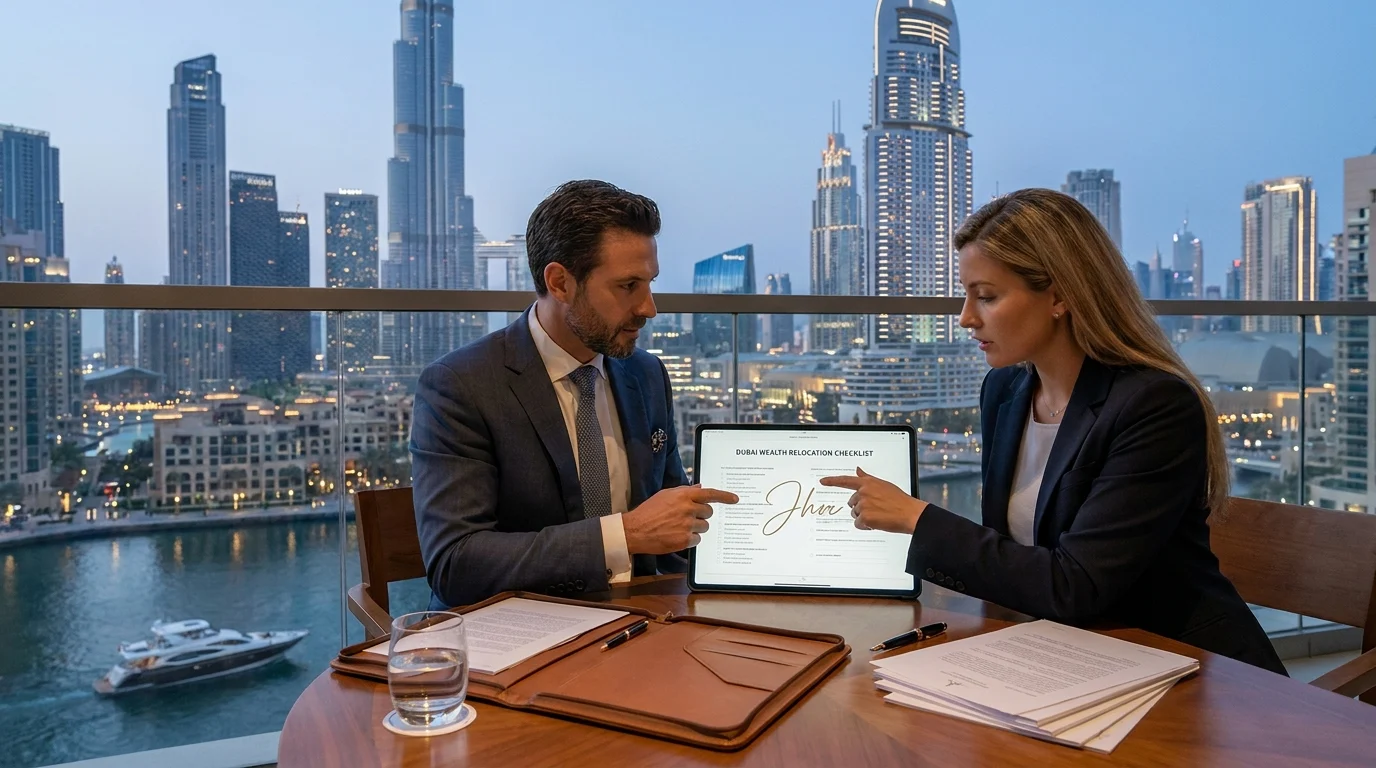
Dubai Wealth Relocation Checklist
Relocating wealth to Dubai requires a structured approach covering legal residency, tax planning, asset protection, and lifestyle integration. The Dubai wealth relocation checklist provides a practical framework for high-net-worth individuals to manage key moving phases, including pre-arrival financial structuring, establishing a home, and assembling professional advisors in the United Arab Emirates. The wealth relocation process is complex and demands careful coordination across multiple professional disciplines.
Disclaimer: This article provides general information and does not constitute legal, tax, or investment advice. Relocation decisions involving visas, property acquisition, corporate structuring, and wealth management are regulated activities in the UAE. You must consult with licensed and regulated UAE professionals, such as lawyers, tax advisors, and financial planners, before taking any action based on this information.
The UAE government offers several residency pathways for investors, each with specific financial requirements. The Golden Visa scheme offers 10-year residency, while the Retirement Visa provides a 5-year option. Understanding these options is the first step in planning your relocation.
| Visa Category | Minimum Investment Requirement | Key Benefits | Ideal Candidate Profile |
|---|---|---|---|
| Golden Visa (Real Estate) | AED 2 million in property | 10-year renewable visa, sponsor family and domestic staff, no residency requirement | Investor seeking a tangible asset and long-term residency in Dubai |
| Golden Visa (Investment Fund) | AED 2 million in an accredited UAE investment fund | 10-year renewable visa, diversifies investment beyond real estate, sponsor family | Investor preferring financial assets over physical property for visa qualification |
| Golden Visa (Company Founder) | Founder of a UAE-based startup sold for at least AED 7 million | 10-year renewable visa, recognizes entrepreneurial success, provides long-term stability | Successful entrepreneur with a proven track record in the UAE market |
| Retirement Visa | Property worth AED 1 million OR AED 1 million in savings OR active income of AED 15,000/month (Dubai) | 5-year renewable visa, specifically for individuals aged 55 and over | Retiree with stable passive income or significant savings seeking a secure lifestyle |
Dubai Wealth Relocation Checklist Gallery
Dubai Wealth Relocation Checklist decisions should be checked through visuals, documents, pricing evidence, and provider details before a reader commits time or money.


Phase 1: Pre-Arrival Legal and Financial Strategy
The success of a wealth relocation depends on the legal and financial groundwork completed before the physical move. The pre-arrival phase focuses on securing an exit from your current tax jurisdiction, structuring assets for optimal protection within the UAE's framework, and preparing legal documentation for your family. Proactive planning prevents future complications with tax authorities and ensures a seamless transition.
Verify Personal and Family Documentation
- Passport Validity: Ensure all family members' passports have at least six months of validity remaining.
- Document Attestation: Have essential documents like birth certificates, marriage certificates, and educational degrees attested by the UAE Embassy in your home country. Document attestation is a mandatory step for sponsoring family visas.
- Photograph Requirements: Prepare digital and physical passport-style photographs that meet UAE immigration specifications.
Execute Your Tax Exit Strategy
- Consult Tax Advisors: Engage with tax professionals in both your home country and the UAE to create a compliant exit strategy. For UK residents, the exit strategy involves navigating the Statutory Residence Test (SRT).
- Time Your Departure: Align your relocation date with the tax year of your home country to create a clean tax break and avoid dual tax residency issues.
- File Departure Forms: Submit all required tax departure forms to your home country's tax authority, such as the HMRC P85 form for UK residents.
Structure Corporate and Personal Assets
- Establish a Holding Company: Consider setting up a UAE-based holding company in a free zone like the Dubai International Financial Centre (DIFC) or Abu Dhabi Global Market (ADGM) to hold international assets and business interests.
- Review Estate Planning: The UAE operates under Sharia principles for inheritance. A registered DIFC Will allows non-Muslims to specify asset distribution according to their home country's laws for their UAE-based assets.
- Assess Global Asset Protection: Evaluate your global asset portfolio and consider consolidating the portfolio under UAE-based structures for centralized management and potential tax efficiencies. The DIFC registered a total of 5,523 active companies by the end of 2023.
Phase 2: Securing Residency and Banking
After initiating your move, the immediate priorities are to formalize your legal status and establish your financial footprint in the UAE. Formalizing your legal status involves navigating the visa application process, which includes a medical fitness test and biometrics, and opening bank accounts. Securing an Emirates ID card is a critical milestone, as the card unlocks access to most services, including home rentals and utility setup.
Complete the UAE Residency Visa Process
- Entry Permit: Your immigration advisor or corporate service provider will first apply for an entry permit, which allows you to enter the UAE to complete the visa formalities.
- Medical Fitness Test: Undergo a mandatory medical screening at a government-approved health center. The test typically checks for specific communicable diseases.
- Biometrics and Emirates ID: Visit a Federal Authority for Identity and Citizenship (ICP) service center to provide your biometric data for the Emirates ID card.
- Visa Stamping: Once the medical test is passed and biometrics are complete, your passport will be stamped with the residency visa. The physical Emirates ID card is usually delivered shortly after.
Establish UAE Private Banking Relationships
- Select a Bank: Select from local banks like Emirates NBD and First Abu Dhabi Bank, or international private banks with a presence in the DIFC like HSBC and Standard Chartered.
- Prepare Documentation: Required documents typically include your original passport with the UAE entry permit, a recent utility bill from your home country, and a bank reference letter.
- Meet Initial Funding Requirements: Private banking services often require a minimum deposit or assets under management, which can range from $250,000 to over $1 million USD.
Phase 3: Acquiring Property and Establishing a Home
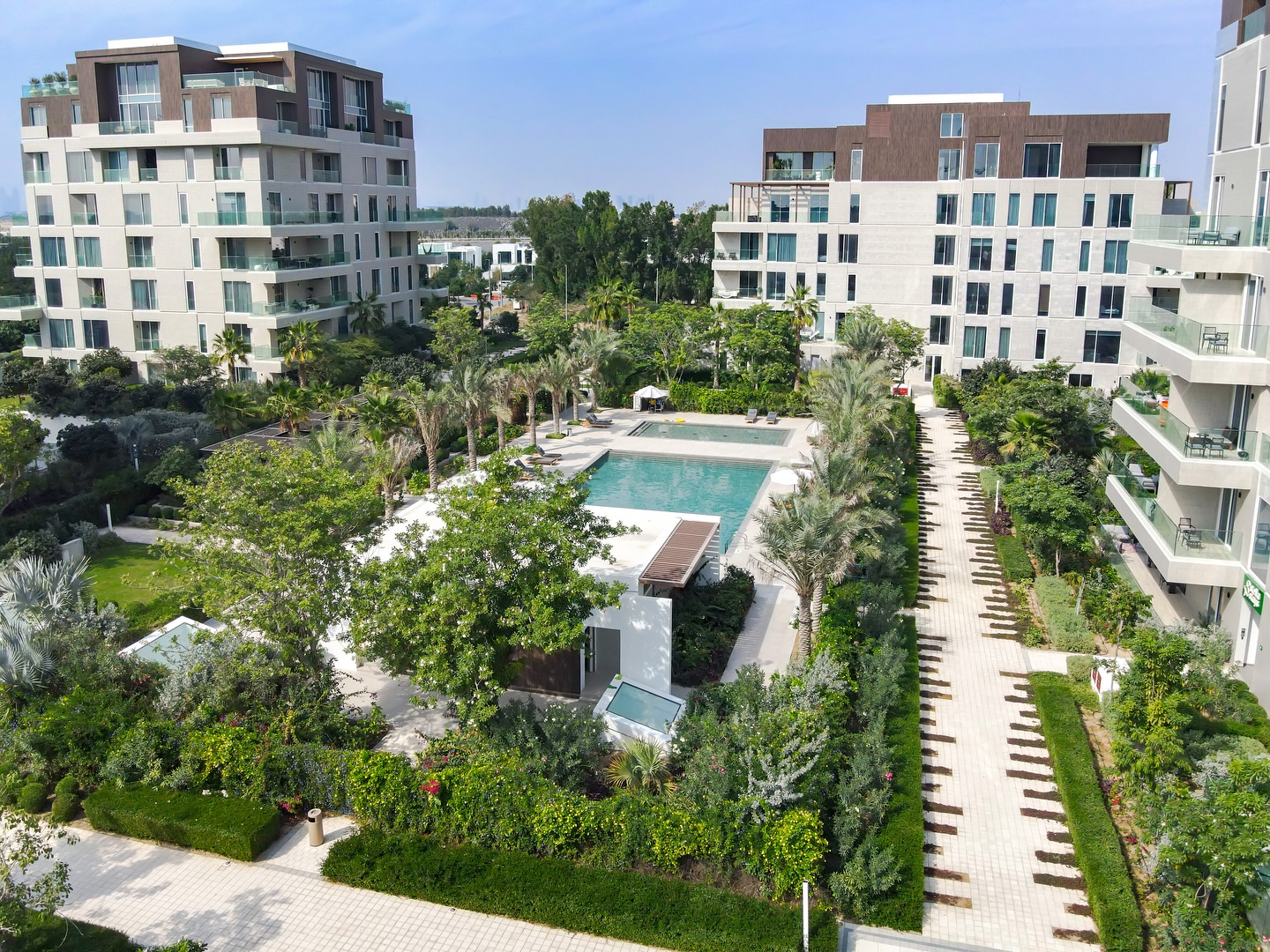
Securing a primary residence is a fundamental part of the relocation. Dubai's real estate market offers numerous options in designated freehold areas where foreign nationals can own property. The property acquisition process is regulated by the Dubai Land Department (DLD) and its regulatory arm, RERA, ensuring transparent transactions covering the initial agreement and the final title deed transfer.
Define Property Search and Acquisition Criteria
- Choose a Community: Research and visit communities that match your lifestyle needs, such as Emirates Hills for large villas, Downtown Dubai for luxury apartments with city views, or Palm Jumeirah for waterfront living.
- Engage a RERA-Certified Agent: Work only with a real estate agent who is registered with RERA to ensure professional conduct and adherence to regulations.
- Finalize Budget and Payment Plan: Determine your total budget, including the purchase price, DLD fees (typically 4% of the property value), agent commissions, and other associated costs.
Navigate the Property Purchase Process
- Sign Memorandum of Understanding (MOU): Once a property is selected, you and the seller will sign a formal sales agreement, known as Form F, and you will pay a security deposit.
- Obtain a No-Objection Certificate (NOC): The property developer must issue an NOC to confirm there are no outstanding service charges or liabilities on the property.
- Transfer of Title Deed: The final step occurs at a Dubai Land Department trustee office, where the payment is made and the title deed is officially transferred to your name. The DLD reported that Dubai's real estate sector achieved a total transaction value of AED 634 billion in 2023.
Phase 4: Family and Lifestyle Integration
A successful relocation extends beyond financial and legal matters to encompass family well-being. The family and lifestyle integration phase covers essential arrangements, including securing school placements, obtaining comprehensive health coverage, and managing household logistics. Dubai's infrastructure supports expatriate families, but planning is crucial for high-demand services like private education where waiting lists are common.
Arrange Schooling and Education
- Research Curricula: Dubai's private schools offer various international curricula, including British (GCSE/A-Levels), American (AP), and the International Baccalaureate (IB). The Knowledge and Human Development Authority (KHDA) provides school ratings and inspection reports.
- Manage Application Timelines: Top-tier schools often have application deadlines 12 to 18 months in advance of the academic year. Start the process early.
- Schedule School Tours: Arrange visits to shortlisted schools to assess the facilities, meet faculty, and understand the school's culture and ethos.
Secure Comprehensive Health Insurance
- Mandatory Coverage: Health insurance is mandatory for all Dubai residents. As a sponsor, you are legally required to provide coverage for your family and any domestic staff.
- Select a Premium Plan: Choose a comprehensive insurance plan that offers extensive network coverage, including private hospitals, and provides international coverage for travel.
Manage Household Logistics
- Sponsor Domestic Staff: The UAE has a clear process for sponsoring domestic help, including maids and drivers, which requires a separate visa application.
- International Shipping: Coordinate with a reputable international moving company to ship your household goods and personal effects.
- Driving License Transfer: Residents from certain eligible countries can directly convert their home country's driving license to a UAE license. Others must pass a local driving test. The official UAE government portal lists eligible countries.
Assembling Your Dubai Advisory Team
Effectively managing wealth in Dubai requires specialized, locally licensed advisors. Specialized advisors provide the necessary expertise to manage the UAE's legal and financial systems, ensuring compliance and optimizing personal and corporate structures. Building relationships with these advisors early is a critical investment. Dubai's population exceeded 3.65 million by the end of 2023, per the Dubai Statistics Center, driving demand for professional services.
- Immigration Lawyer: Manages all aspects of residency visas for you, your family, and employees.
- Corporate Service Provider: Assists with company formation, an essential component for many visa and wealth structuring strategies.
- Private Banker: Provides tailored wealth management, credit facilities, and investment advisory services.
- Cross-Border Tax Advisor: Ensures compliance with tax regulations in your home country and the UAE.
- Family Office Advisor: Offers holistic management of significant family wealth, including governance, succession planning, and philanthropic activities.
Executing a high-value relocation to Dubai involves many coordinated steps. For personalized assistance with introductions to regulated legal, financial, and real estate professionals, our concierge service can provide a structured approach tailored to your specific requirements.